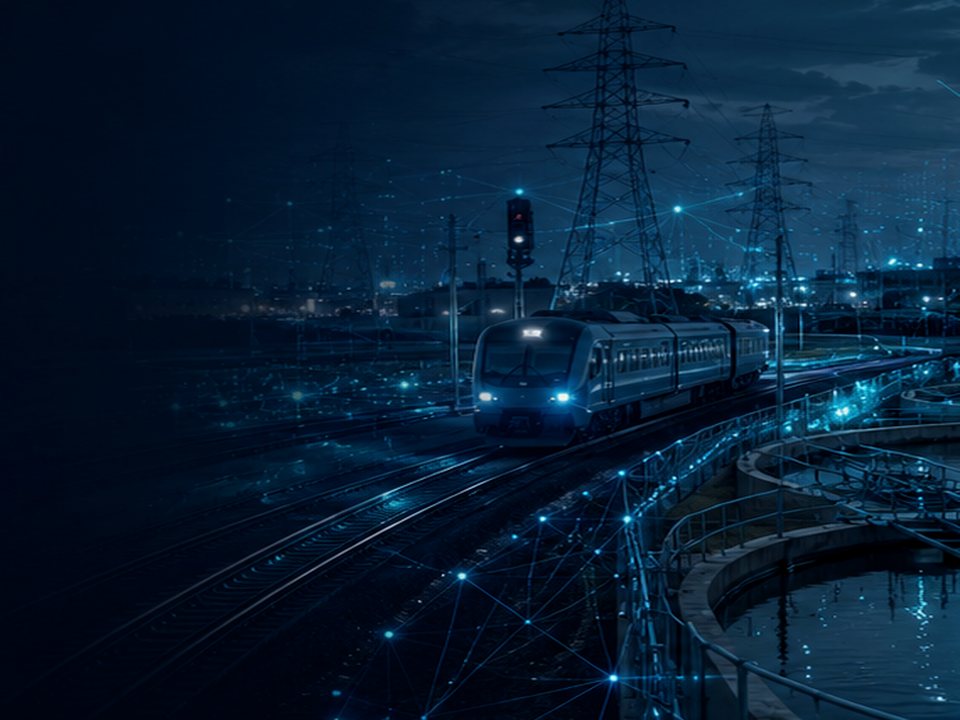
Industry-focused OT cybersecurity advisory

Operational context changes the cybersecurity problem.

The same control cannot be copied across every sector. Safety obligations, asset lifecycles, service dependencies and engineering constraints shape what effective cybersecurity looks like.

SafeCyph3r adapts risk, architecture and monitoring advice to the operational environment rather than forcing every organisation into a generic model.

Advice shaped around critical functions, not just technology

Effective OT cybersecurity starts with understanding what the system does, what happens when it is unavailable or manipulated, and which constraints must be respected during change.

Our sector work considers operational consequence, engineering ownership, legacy technology, third-party dependencies and the practical path to implementation.

Transport & rail
01

Protecting systems that move people and maintain network operations

Transport environments combine safety-critical control, distributed field assets, legacy platforms, passenger-facing services and complex operational dependencies.

Typical environments

  • Rail signalling and control systems
  • Operations control centres
  • Station, tunnel and field systems
  • Telecommunications and operational networks
  • Remote maintenance and third-party support

Common priorities

  • Segmentation across safety and operational domains
  • Secure access for maintainers and suppliers
  • Monitoring without disrupting service
  • Risk-based treatment of legacy assets
Explore relevant services
Water & wastewater
02

Strengthening resilience across distributed control environments

Water operations depend on central control, remote telemetry, treatment processes and geographically dispersed sites that must remain available and safe.

Typical environments

  • Treatment and processing facilities
  • Pumping stations and reservoirs
  • SCADA and telemetry networks
  • Remote sites and communications links
  • Operational support and maintenance systems

Common priorities

  • Visibility across distributed assets
  • Resilience of communications and control
  • Secure remote support
  • Response planning for operational disruption
Explore relevant services
Energy & utilities
03

Supporting secure and reliable utility operations

Utility environments require cybersecurity controls that preserve availability, support safe engineering practices and account for highly interconnected operational assets.

Typical environments

  • Control centres and field automation
  • Substations and distributed utility assets
  • Operational communications and telemetry
  • Engineering and maintenance workstations
  • Vendor-supported control platforms

Common priorities

  • Risk-based segmentation and access control
  • Asset and communication-path visibility
  • Monitoring of high-impact operational events
  • Governance aligned to critical-infrastructure obligations
Explore relevant services
Industrial & manufacturing
04

Reducing cyber risk without undermining production

Industrial environments rely on process continuity, specialist equipment, vendor ecosystems and long-lived technologies that cannot always be changed quickly.

Typical environments

  • Process-control and automation platforms
  • Production lines and industrial networks
  • Engineering workstations and maintenance tools
  • Plant historian and supervisory systems
  • Vendor and supply-chain connectivity

Common priorities

  • Protection of production-critical assets
  • Control of engineering and privileged access
  • Segmentation between enterprise and plant systems
  • Practical treatment of unsupported technology
Explore relevant services
Smart infrastructure
05

Securing connected operational services across converged environments

Smart infrastructure brings together operational technology, IoT, physical security, communications and enterprise platforms across highly interconnected services.

Typical environments

  • Tunnels and transport-management systems
  • Building and facility control systems
  • CCTV, access control and safety systems
  • Connected sensors and edge devices
  • Integrated command and monitoring platforms

Common priorities

  • Clear trust boundaries across converged systems
  • Secure integration of third-party technologies
  • Centralised monitoring with operational context
  • Governance across multiple owners and suppliers
Explore relevant services

Experience across transport, water and complex operational systems

Direct delivery experience includes rail and metro environments, water and wastewater control, tunnels and transport-management systems, OT monitoring and SOC enablement, and IEC 62443 risk and architecture assessments.

Rail and metroWater control systemsTunnels and road operationsOT SOC enablementIEC 62443 assessments

Different sectors, recurring operational challenges

01

Legacy and unsupported technology

Controls must account for long asset lifecycles, limited patching options and constrained change windows.


02

Remote and third-party access

Operational support must remain available while identity, device and session risks are controlled.

03

IT and OT convergence

Cloud, analytics and enterprise integration introduce new pathways that require explicit trust boundaries.

04

Monitoring with operational context

Telemetry and alerts must reflect asset criticality, process behaviour and realistic response actions.

Start with the systems and operational outcomes that matter most.

We can shape a focused engagement around your sector, assets and risk priorities.

Request a confidential consultation